Knitting stash mini-tour

I tend to acquire things and hang onto them. With books, okay, that’s fine. I just finished my MLS, I’m in graduate school in medieval history: books are easy to justify. With yarn and fiber, however… well, I’ve been knitting for about eight or nine years now, and spinning just a couple fewer. And in that time I’ve gone to Rhinebeck and a couple of local fiber fairs in Indiana and lived near lovely, wonderful, friendly LYSes that had great sales. Turns out, that all adds up. They say a picture’s worth a thousand words, right?

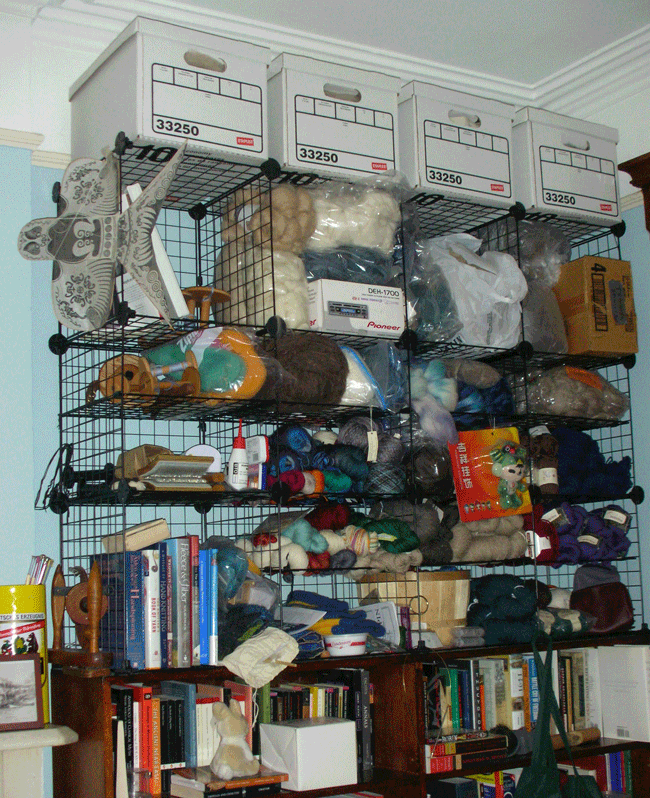
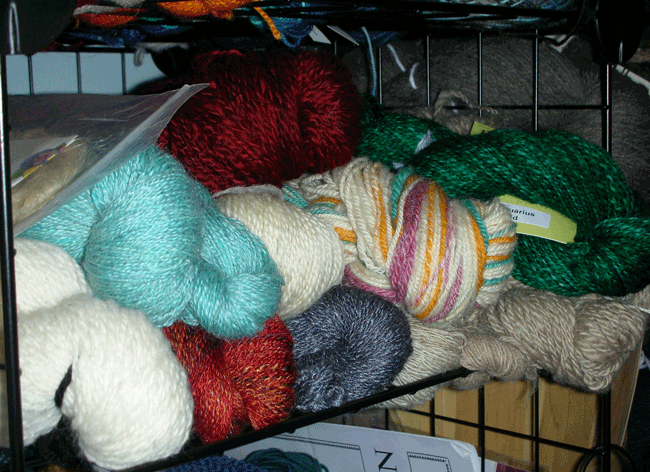
That’s all the yarn and fiber I own, all in one place. There was a time when I would have looked at a photograph like that and thought “Man, is she nuts, or what?” Now I look at it and think that, but I also sometimes think “but there’s nothing I want to work on!”

In case it’s hard to see what’s going on in that enormous set of wire racks, here’s a mini-tour of the yarn. (I’ll do fiber and fabric on another day.)

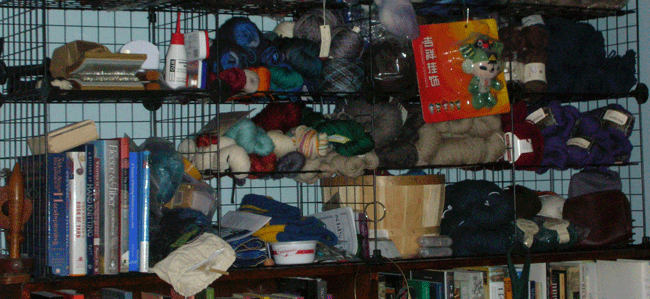
Today we’ll start with the lower half, which is all yarn.

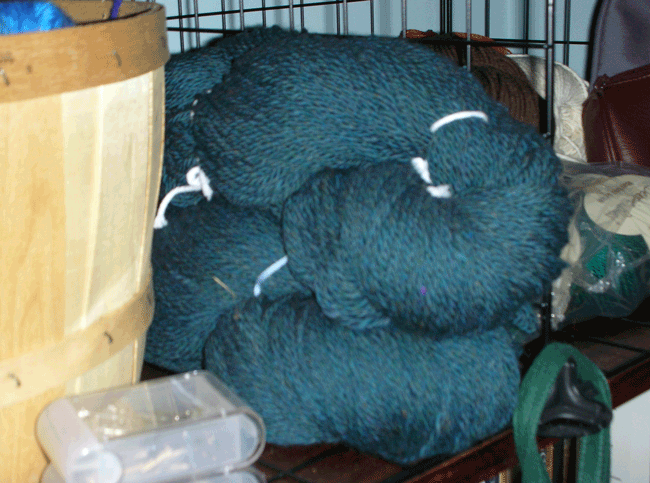
In the lower-right-hand corner, there’s all the yarn that is destined to become sweaters. The brown will be the Indigo Playmate sweater from Wendy Bernard’s Custom Knits. The blue and purple will both be cabled cardigans, though I haven’t settled on a pattern or design for either of them. The red are balls that go with a cabled cardigan I’ve got on the shelf for now: it’s about halfway finished, and I’ll love it when it’s done, but right now it’s driving me crazy.


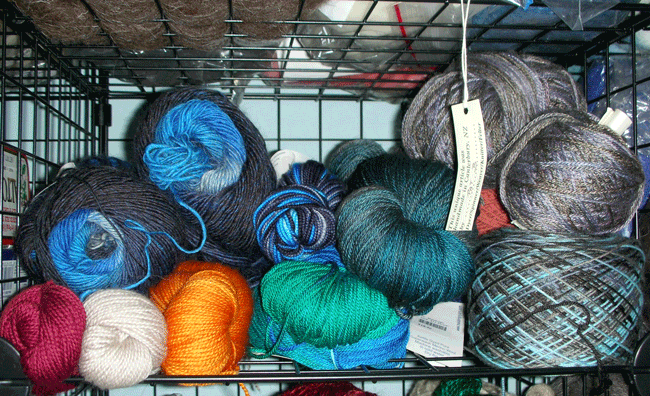
The other main collection of commercial yarn is my stash of sock yarn:

The purpley-grey in the top right does not want to be socks, so I’m planning on making it into some kind of wrap or scarf. The Lorna’s Laces below it (light blue and black) pools like crazy if I knit it into socks my size, so I’ll have to find someone with small feet whom I like enough to give hand-knit socks. (Sadly, this rules out absolutely every member of my immediate family. We all have huge feet.) The ones I’m looking forward to knitting with the most are the two greens. (Well, and the second skein of Claudia hand-painted, because it’s so sproingy!)

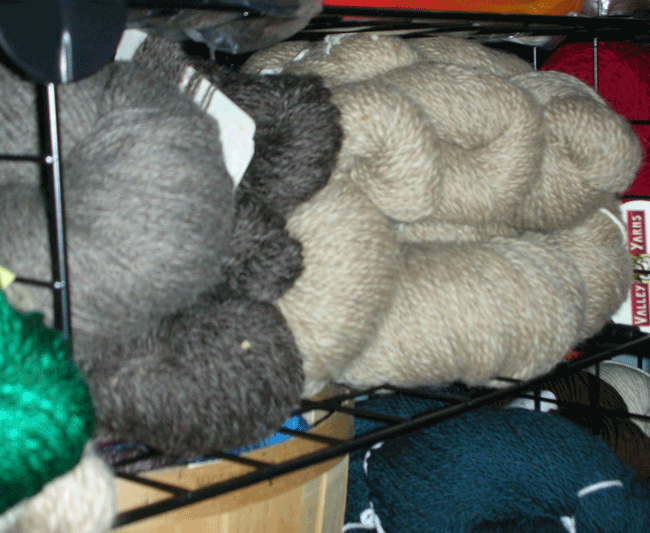
The majority of the rest of my yarn stash is handspun. There are the natural-colored yarns:


The lighter yarn is for a sweater: probably the Tangled Yoke Cardigan, if I got the yardage and weight of the yarn right. The darker is for colorwork with a lighter yarn that I haven’t finished yet.

There are the dyed yarns:

The enormous green skeins are enough for a sweater for someone else, but not for me — there is a downside to being 5’11” with long arms and a long torso, and it’s that spinning up for a sweater takes a little longer. The white-pink-green-yellow is probably going to be socks for a child: I dyed the fiber with easter egg dyes and it ended up a little too pastel for my taste. The rest mostly tend toward lace-weight, so I’ll be knitting a good number of light, lace pieces in the future.

Overall, I love spinning with color, but I find it hard to get enough fiber to make any particularly sizable project — and I only need so many hats and mittens, even in the Northeast.

If you happen to spin, what do you do with small quantities of handspun yarn? If you don’t spin, what would you like to do with it, if you had a couple hundred yards of handspun colorful yarn?

Sizing up Simple Math

The Simple Math pattern (by Elizabeth Hartman of Oh, Fransson!) as written makes a finished quilt of about 47″ x 62″, made of 48 blocks. Now, I’m all for reasonable-sized projects (well, sometimes), but I wanted to make it in a size I’d actually use on a bed: I’ve got enough lap blankets knit up to last me quite some time, and I’m not much for hanging quilts on the wall. (Well. Not yet, at least.)

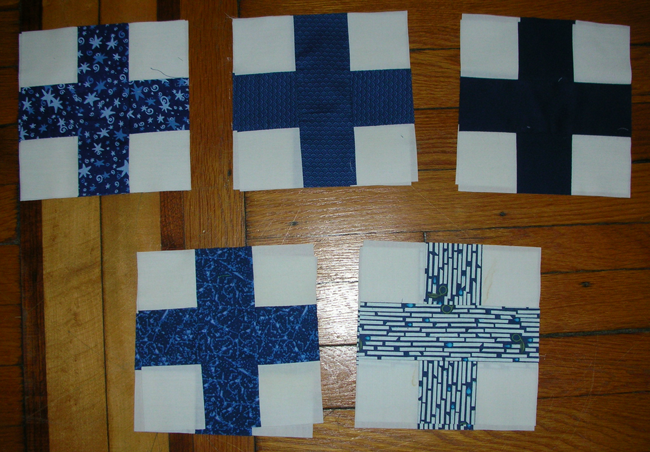
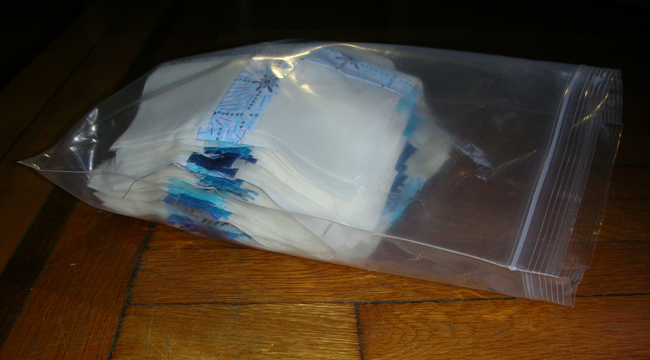
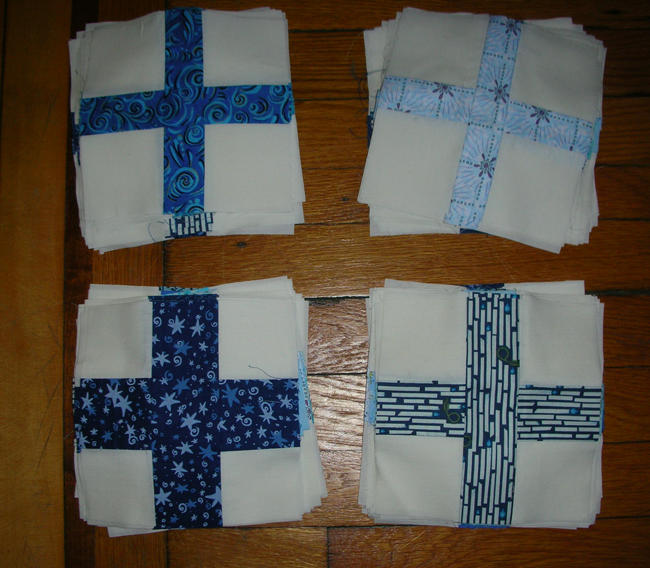
I figured out that if I wanted to make a quilt roughly twin sized, I’d need to make 80 blocks. Well, I thought — I’m well on my way! Look, I have 64 of them done!


All right, so it doesn’t look very impressive in those little bitty stacks. But that’s still 64 6.5″ square crosses right there!

And I only have two more colors to go, to get this all cut and sewn, see?

And then my mother (for whom I’m making this quilt) said: “Well, we don’t really need a twin size quilt. What about a full size one for the guest room?”

So I agreed, sighed, looked at the pattern, and drew myself a new mock-up. This one takes 120 blocks:

Here’s my logic in putting this diagram together.

I’m putting 2″ strips between the blocks, so that works out to 1.5″ of sashing on each side of a block (assume 1/4″ seams). The blocks are squared to 6.5″, so they will be 6″ square, if I put them together properly. This means I can increase this pattern by increments of 7.5″ (6″ block + 1.5″ sashing) So I did that, and increased it in size to 10 x 12 rows of blocks.

You’ll notice one other difference from the pattern as written: I decided to add a striped border using the scraps from the fat quarter fabrics. It will be 3″ wide, striping blues and the white background fabric. The white stripes will always be 3″ square, but the blues will vary in width from 1 1/2″ to 2 1/2″, in the same increments as the crosses. I’m looking forward to piecing that part together, though I suspect I’m going to hate it just a little bit when I’m putting it together.

That striped border adds 3″ to each side of the quilt, for a total of 6″. But then I wanted to be sure I had plenty of material around the edge of the quilt to trim and still have enough room to sew on the binding without it obscuring the stripes. So I added in a 3″ strip of sashing around the outside of my impromptu striped border, which adds another 6″ to the final dimensions.

And when you do the math for all of that, the finished quilt ends up being a whopping 88.5″ x 103.5″

I’m a little daunted by the idea of quilting all of that, but I’m pretty sure I know how I’m going to do it, so that part, at least, is a little less scary.

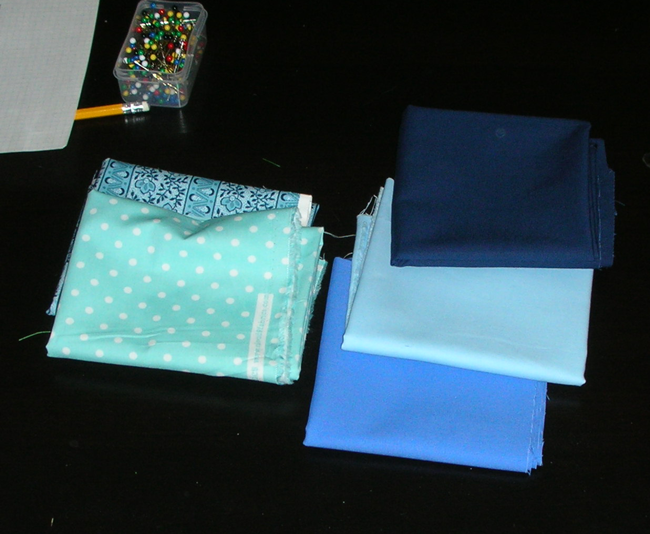
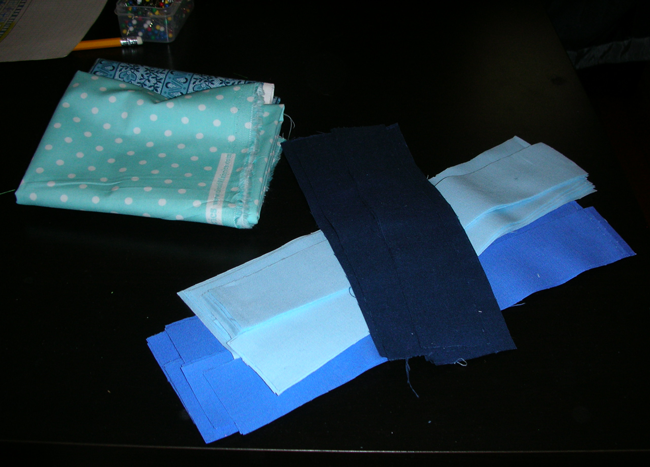
Of course, increasing from 80 to 120 blocks doesn’t just happen by itself. So I walked over to the fabric store, and picked up three solids and two prints, to make another 40 blocks:

The solids are Kona cotton, the prints are whatever happened to be in the fat quarter bin and caught my eye.

I’ve cut three of them so far, but then the draft deadline for the paper that will become my thesis called, and I’ve paused right now, about to cut out the stripes from the last two fat quarters, and then cut 40 more 6″x6″ white blocks for the backgrounds of all those new crosses. I’m just glad I have a few extra yards of this white background fabric: otherwise I would be very, very sad.

Better photograph of the Scrap Attack quilt

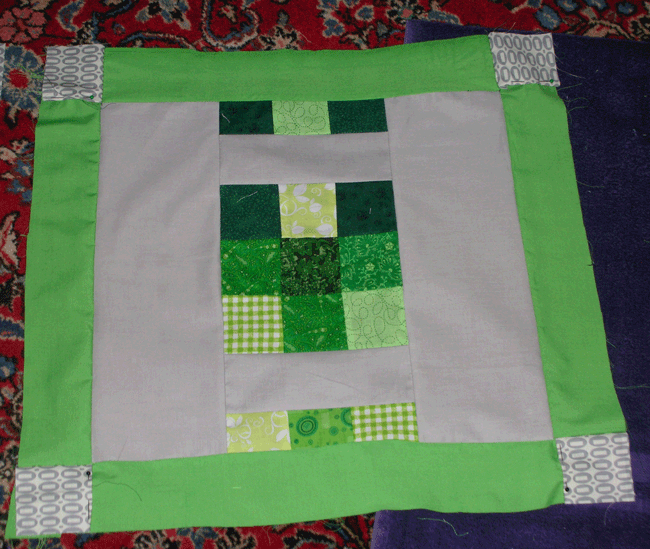
I finally pressed it, (not that you can entirely tell: the light green fabric is a little cranky) and it’s all ready to quilt and bind. Then, of course, I have to decide who to give it to. It’ll probably sit on a shelf for a little while until a baby or a birthday comes along.

(More information about the fabric and so on is here.)

I guess it’s not called frogging when you quilt, huh?

Just a short post today, because I have a 25-page paper due tomorrow.

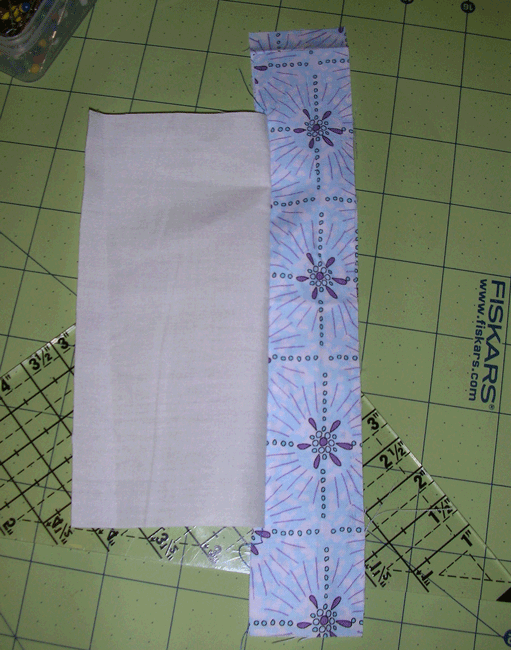
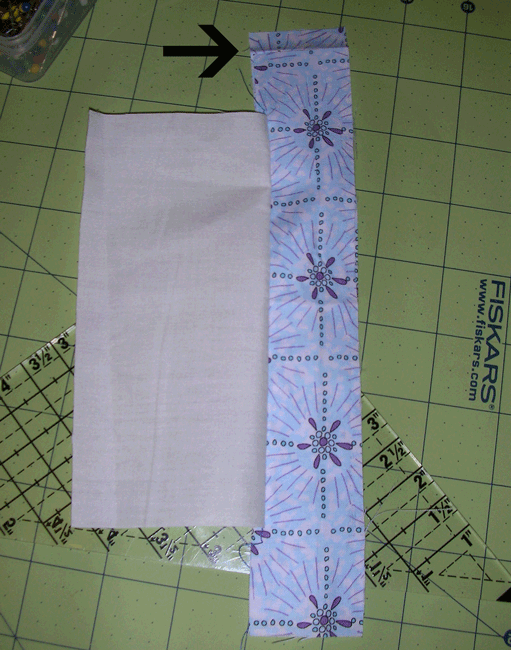
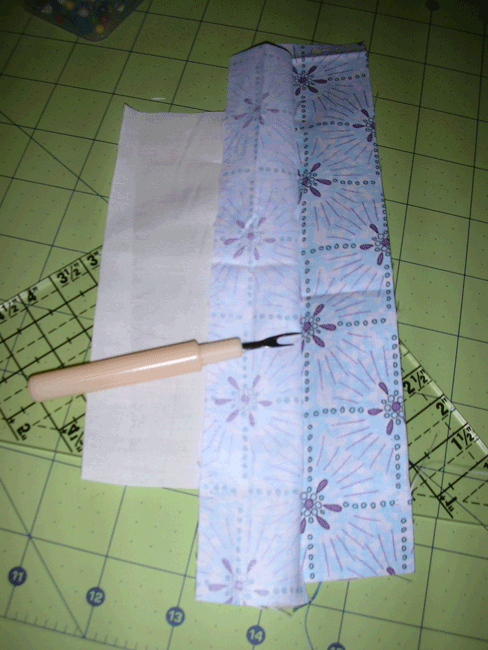
So you know how you get into a rhythm of something, and it starts to feel almost automatic? I was in that state earlier when I was working on a set of blocks for my Simple Math quilt. Then I looked down at what I was working on.

What’s wrong with this picture?

Let me help:

Do you see it now?

I wasn’t paying close enough attention, and sewed both color strips in place of just one of them. So I got to make friends with my seam ripper. I think we’re both the better for it. I’ve ripped out a couple of other blocks since then, to make them line up square in the center. It may not look that bad, but I would much rather re-do it now than look at the quilt months from now and see only the mistakes I didn’t fix.

And of course, my mother (for whom I’m making this quilt) decided a few days ago that, really, they don’t have any twin beds that need quilts. But there is the double bed in the guestroom…

So I got to do all the math to size up the Simple Math quilt not just to twin size, but again up to full, and to find the fabric I needed to make the extra blocks I hadn’t counted on at first. My scanner is being stubborn this morning, so I’ll scan in my drawings later this week.

Scrap Attack quilt top finished!

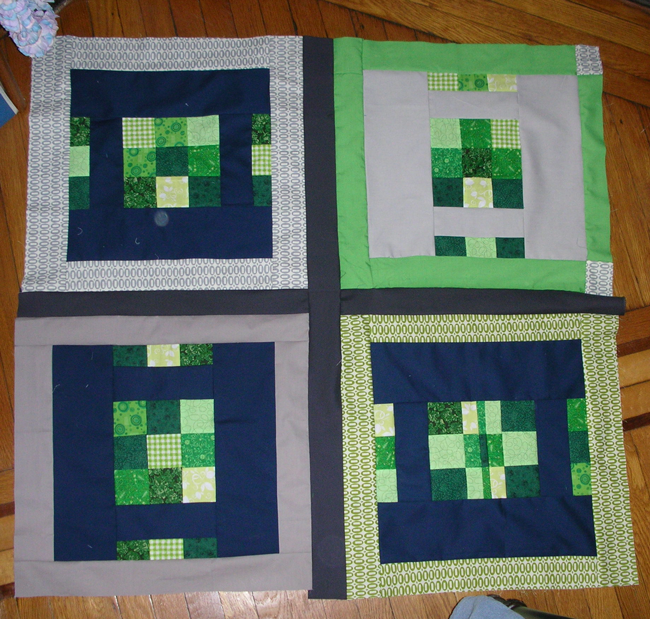
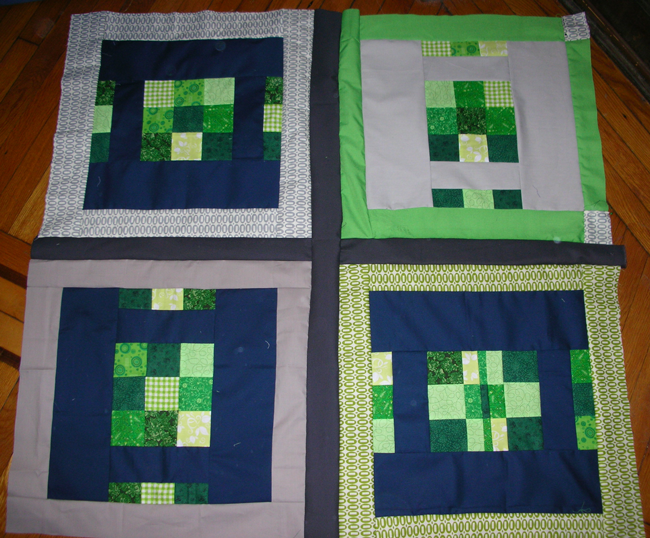
Well, it looks like my worries about not finishing in time for Monday’s deadline were unfounded. I finished the top of my scrap quilt just now.

The fabric is almost entirely scraps from the Nine-Patch quilt. I had three central squares worth of strips, and pieced the fourth central square out of the edges and scraps from making the other squares. The greys all came from a scrap pack from FabricWorm, which I’m glad I impulse ordered a few weeks ago: without it I would have had a much harder time making anything even remotely quilt-sized. The only things I pulled from my fabric stash are the charcoal sashing and the green pezzy prints for one border.

It’s about 45×45″ though I imagine it’ll lose a tiny bit of size when it’s quilted.

I’m planning to bind it in the same charcoal that I used for sashing. I honestly have no idea what I’m going to use for a backing, but I suppose I have time to figure that out.

On Monday, I’ll go back to the Simple Math quilt, and what happens when the person you’re making the quilt for says “Oh, by the way, can you make it a full instead of a twin?”

Quilt along and scrap challenge

What’s this?

It looks an awful lot like I’m participating in this:

Scrap Attack Quilt-Along

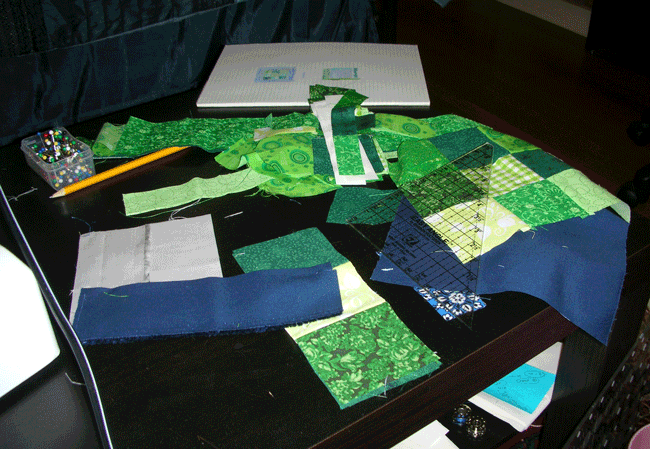
When I first saw this Scrap Attack Quilt-Along I thought there was no way I’d have enough scraps to do anything with. But minis/baby quiltes are okay, so I’m going to go for it. I’m using scraps from the Nine Patch Lattice Quilt a couple of solids and neutrals from a scrap pack I bought from FabricWorm and a little bit of blue leftover from the solid colored blocks I’m adding to the Simple Math quilt.

I’m not really planning this out in advance, other than basing it around nine patch squares. This is a bit odd for me: usually I want to know everything about a pattern well before I start, and exactly how things go together. It turns out it’s kind of nice to just throw a few pieces of fabric together, add something else to the edges and see how it works. I’m figuring on doing four blocks and (if I have enough scraps of it) using the navy cotton as sashing. Backing I’ll figure out later — all you have to have finished is the quilt top, not the quilting, backing and binding.

I’m just hoping I can get it all done by the deadline for Scrap Attack: next Monday! Eeeek!

Chocolate-dipped shortbread cookies

I’ve been very focused on quilting recently, so I thought I’d throw in some baking I did about a month ago as a thank you gift to shake things up a little bit.

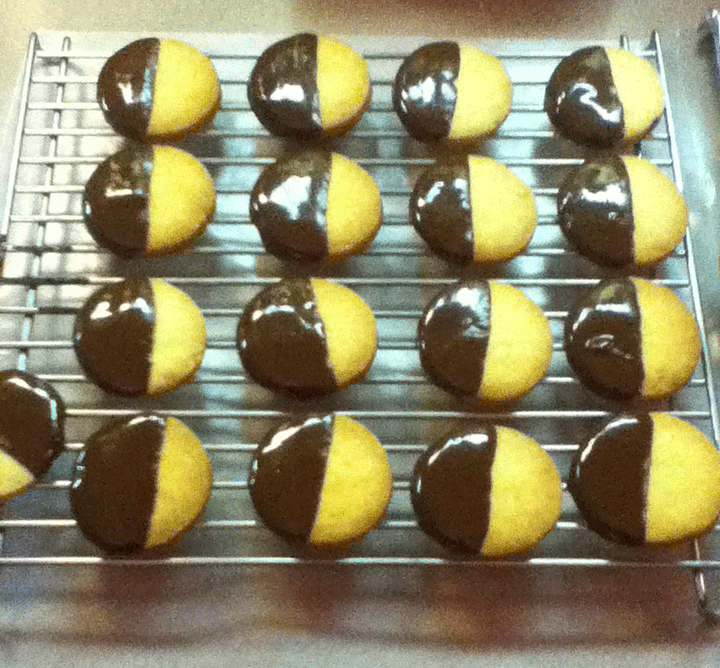
Chocolate-dipped shortbread cookies(Apologies for the picture quality: I borrowed an iPod touch to take these, since my camera wasn’t on hand, and they’re all a bit grainy as a result.)

I decided to give cookies to two people who’d helped me out with applications, and I knew that one of them liked chocolate, and one liked butter cookies. So I decided to make chocolate-dipped shortbread cookies.

The recipe is simple: four parts flour, two parts butter, one part sugar. You can use brown, white or powdered sugar, depending on what you want it to taste like in the end. I tend to use powdered sugar. Take the butter (preferably soft and at room temperature) and cream it with the sugar. Then mix in the flour. It’ll seem like too much, but you should be able to get it all together. (While I sometimes cheat on my order of ingredients, this is one where you really can’t — creaming the butter and sugar first is essential.)

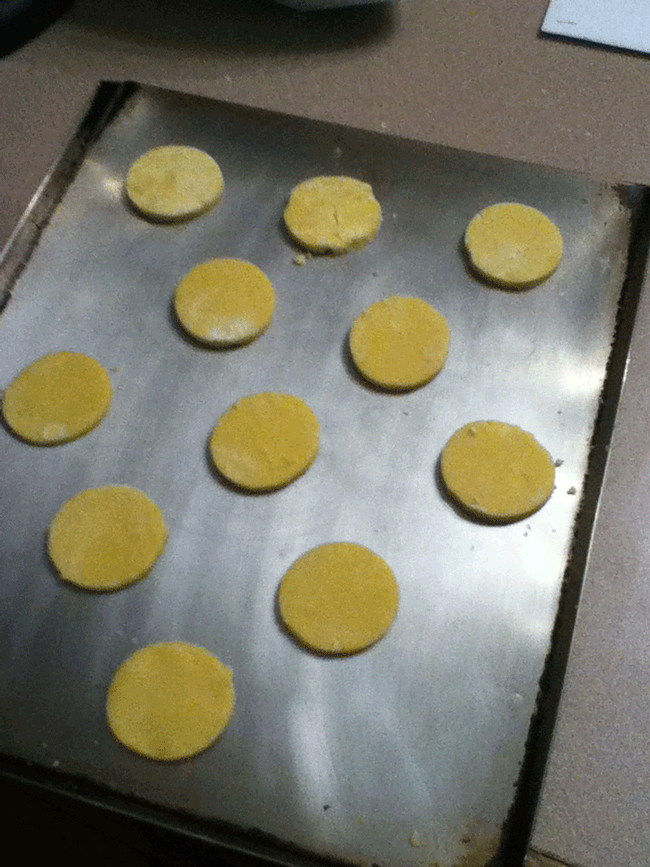
I neglected to take photographs of the dough, so we’ll start with unbaked cookies. I rolled the dough out about 1/2″ thick and cut it with a biscuit cutter – a round cookie-cutter. You could use an upside-down glass, or jar to do the same thing. Some people pat the dough out with their hands, but I try to avoid touching it too much: the more you handle it, the more the butter melts, and that changes how it interacts with the flour when it’s baked, and then your cookies are just a smidge tougher than they might have been.

Raw cookies on a baking sheet

You can tell this is toward the end of the batch by how crumbly the ones on top look: at that point I had rolled the dough out a couple of times, and it picked up just a little more flour each time. Those cookies still taste good, but they don’t look quite as pretty.

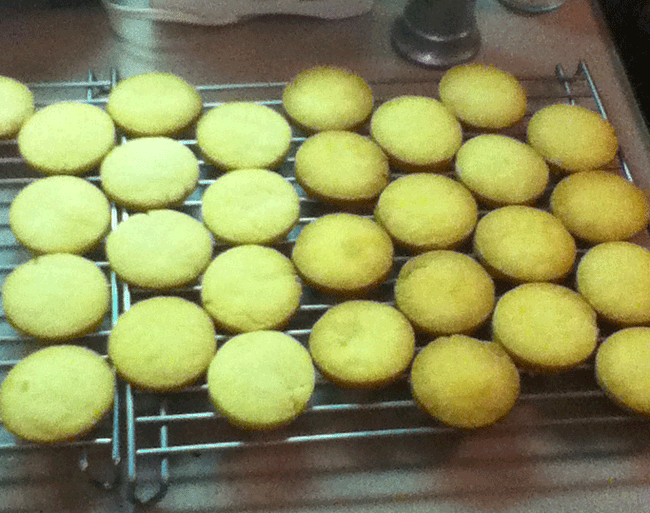
Pop them in the oven at 350 degrees for about 6-10 minutes, depending on how big the cookies you cut out are. Take them out when they start to look golden-brown around the edges — very pale.

Here you see that I overbaked the first batch, by forgetting to set a timer. Ooops. They still taste okay, but the flavor changes a little bit. And these cookies were supposed to be a gift, so that whole batch was out of the running: too unattractive.

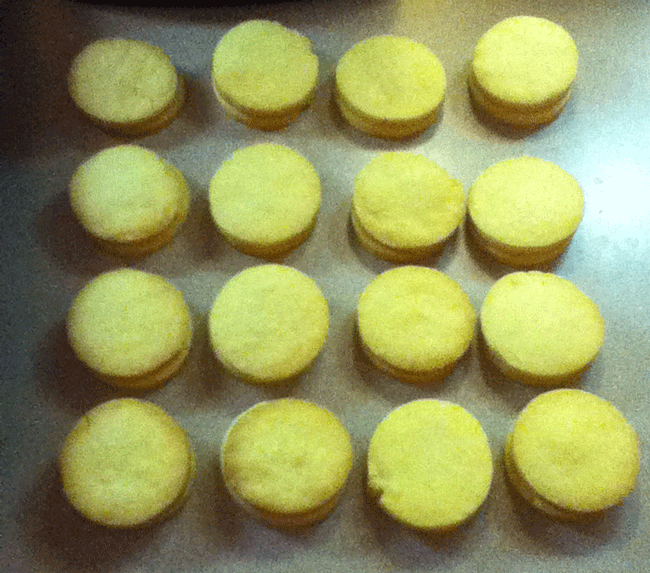
Fortunately, I’d made a triple batch, so I ended up with enough pretty cookies.

And here comes the fun part. One of the two recipients doesn’t like chocolate, so that gift was done, as soon as I boxed it up in a little tin. The other, however, does like chocolate.

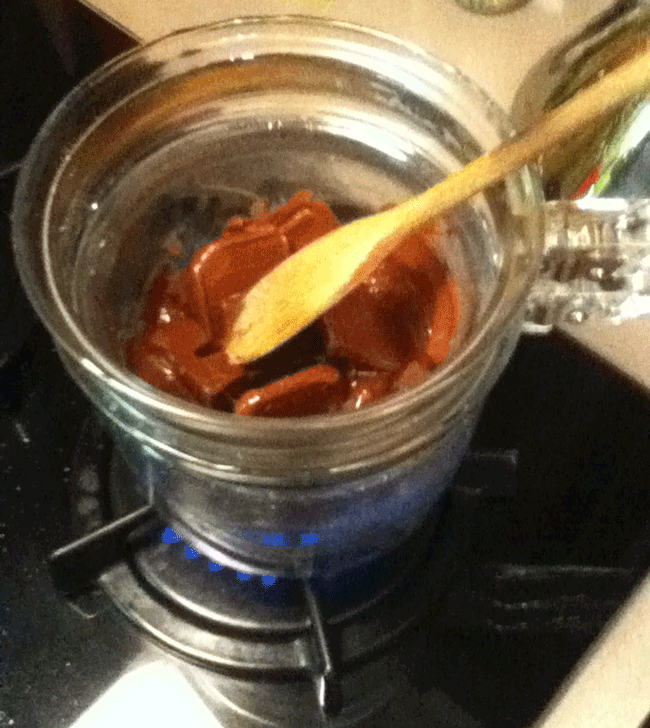
So I melted some semi-sweet baking chocolate in my double-boiler.

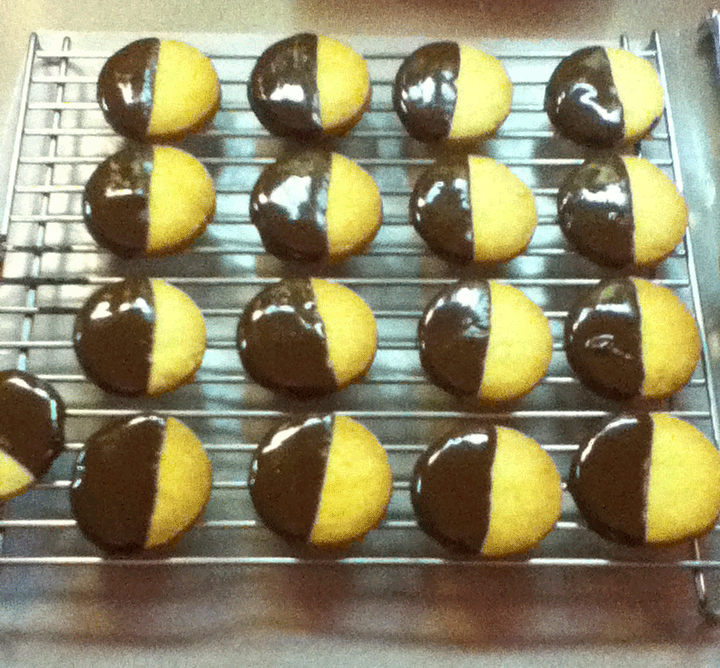
I dipped each cookie halfway, and set them down on racks to cool, with foil underneath the racks. (I tried foil on top of the racks, under the cookies. It turns out that’s an excellent way to end up with chocolate-covered foil and half-dipped cookies. Put the cookies straight on the rack.)

Voila! Chocolate-dipped shortbread. I tend to keep mine refrigerated, and for a long time (well, as long as I can make it last, that is) — it tastes sweeter over time.

Simple Math

Of course, now that I’ve gotten to the point where I could, theoretically, bind and quilt the Nine-Patch quilt, my safety pins haven’t arrived in the mail. And I’ve seen tutorials for using a spray-on-adhesive, but I haven’t really got anywhere outdoors to spray it (or any adhesive). I suppose I could always baste the layers together by hand, but I really hate basting by hand.

That delay clearly just means it’s time to start cutting for another quilt, right?

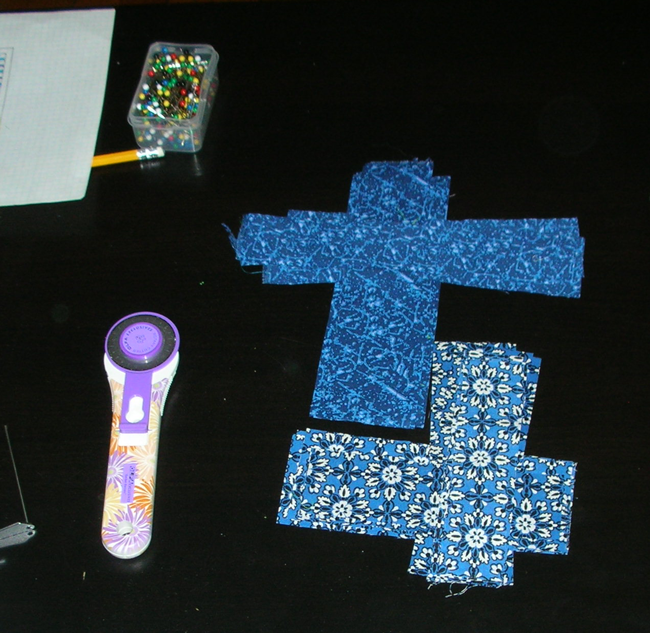
Cut fabric for Simple Math

And maybe piecing a couple of blocks together.

Pieced squares for Simple Math

And then pressing and trimming some of the pieced blocks.

Smallest two sets of pieced and pressed blocks for Simple Math
Fattest cross blocks for Simple Math

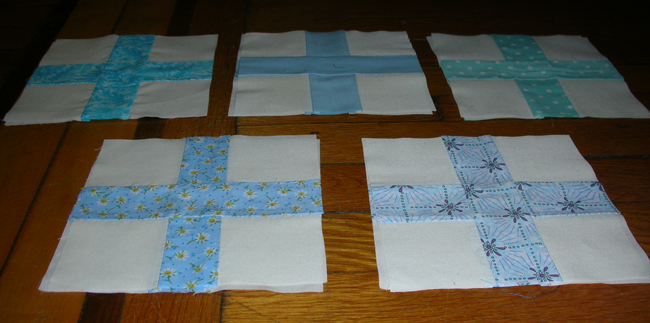
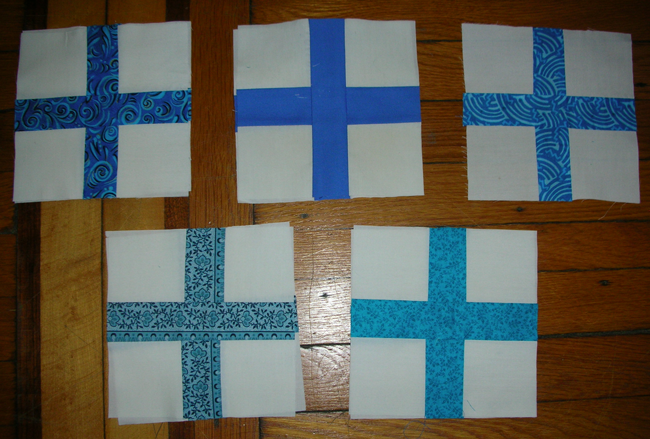
And, well, I’ve now made 60% of the blocks I’ll need for a slightly altered (to Twin size) Simple Math quilt.

Thirty two blocks for Simple Math in four colors

I love the way the crosses vary from narrower to fatter, but it’s been making some of the blocks a little bit challenging.

The larger two, with crosses that are 2″ and 1 1/2″ inches wide, are no problem. The smaller two, with crosses that are 1 1/4″ and 1″ wide, pieced into a block 6″ square — well, in that case, you need your seams to be kind of exact — and not all of mine are. There exists the chance that I’ll have to rip a couple of them out and re-do them later, to make them come out quite right — or give them sliiiiightly wider sashing to make a row go together properly. I’ll see when I have more of the blocks done: I did a much better job with the fifth and sixth pairs of narrow crosses than I had with the first four of them.